Student Voice: “Keep Fahrenheit 451”
- A Letter from Noa Shram
Written as an assignment for Mr. Plush’s 8th grade English class, this letter considers whether Fahrenheit 451 should remain part of the middle school grade. Noa connects Bradbury’s ideas about censorship, technology, and independent thinking to the world we live in now.
Dear Dr. Shulkind,
Fahrenheit 451 should remain a part of the 8th grade curriculum in 2027 because Ray Bradbury’s message about the importance of free access to information and the dangers of censorship is as important as ever. Some may argue that the novel is no longer relevant today, as censorship in 2026 doesn’t involve burning books. However, current students are living in a world where information is controlled by social media algorithms and artificial intelligence, putting the Jewish Values of kehillah (building joyful, welcoming community) and tikkun olam (repairing the world) in danger.
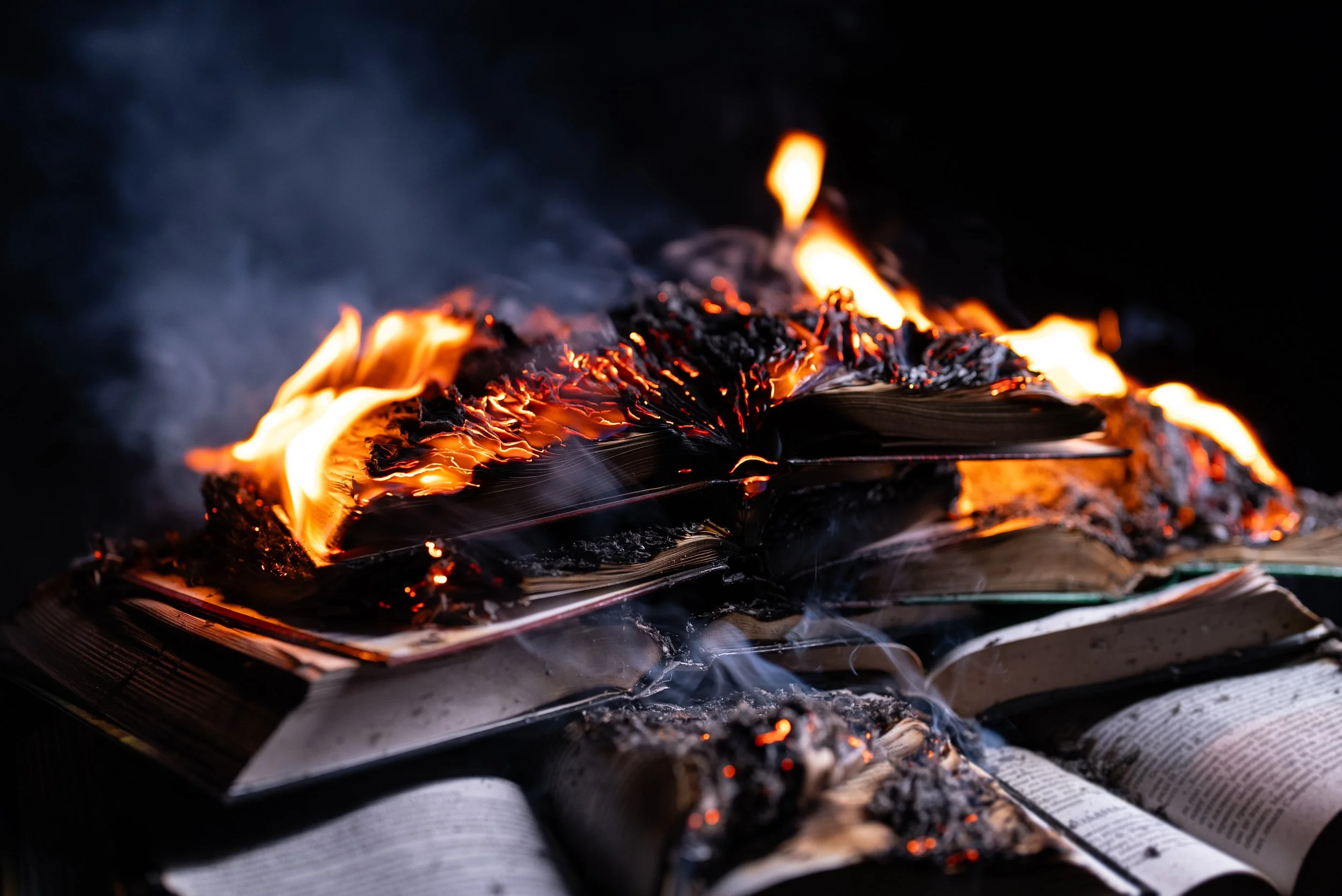
Bradbury’s novel warns readers about a society that avoids deep thinking by replacing books with fast entertainment and distraction. In the society of Fahrenheit 451, books are burned to prevent uncomfortable ideas, and people choose screens and shallow media instead of meaningful conversations. In Captain Beatty's speech to Montag on page 55, he says, “There was no dictum, no declaration, no censorship to start with, no! Technology, mass exploitation, and minority pressure carried the trick.” He explains that books weren't banned by force at first. Society gradually abandoned them on its own. People began wanting shorter books, then condensed summaries, and then nothing at all because life moved too fast and technology made it easier to be entertained than to think. This mirrors exactly what's happening today, as social media algorithms and AI feed us only what we want to see, slowly eliminating our ability to think critically or form our own opinions. When Montag is talking with Clarisse on page 27, she says, “But do you know, we never asked questions, or at least most don’t; they just run answers at you bing, bing, bing.” Clarisse explains that most kids in her class don’t ask questions; the answers are just given to them, so they can’t learn how to think critically. Bradbury’s warning is clear: when people stop seeking knowledge and information is filtered, they lose the ability to question the world around them.
““While it may be a book from the past, it helps us understand the present. The world it warned us about has arrived, and students need to understand how to recognize it.””
Reading Fahrenheit 451 as an eighth grader in 2026 is a very different experience than it would have been for students in previous generations. When readers in 1990 or even 2000 picked up this book, the internet was new, social media barely existed, and artificial intelligence was years away. Bradbury’s world may have felt like an interesting warning for the future. For my generation, the same dangers in the book face us today. In the book, Mildred can’t get enough mindless TV. That’s like doom scrolling in my generation. It’s spending hours on TikTok or Instagram and being fed content by algorithms designed not to inform us but to keep us watching endlessly. Mildred’s issues in 1953 are a warning of 2026. Bradbury wrote this book before any of this technology existed. The fact that his vision has come true suggests that Fahrenheit 451 doesn’t just belong in the past; it belongs in our classrooms, where students are growing up in the world he predicted.
Milken is built around core values that shape not just what students learn, but who they become. These values are both challenged in Fahrenheit 451. In Montag’s world, kehillah is impossible, since neighbors don’t know each other, families don’t talk, and people are so obsessed with entertainment. Human connection is gone. tikkun olam is also impossible in Bradbury’s society, since you cannot repair a world you are not allowed to challenge or criticize. In Captain Beatty’s speech on page 58, he says, “If you don’t want a man unhappy politically, don’t give him two sides to a question to worry him.” When we don’t present alternative points of view, we cannot question the world around us, making improvement of that world impossible. Bradbury shows what happens to kehillah and tikkun olam when those values are ignored. Fahrenheit 451 is very effective for demonstrating the dangers of censorship, social isolation, the elimination of critical thinking, and showing students what happens to the world when we abandon free knowledge.
One of literature’s main purposes is to help readers understand the world around them. It acts as a warning system and challenges us to think critically. Bradbury does both in Fahrenheit 451. He predicted the dangers of social isolation and the disappearance of independent thinking long before television, the internet, or artificial intelligence. Although books are no longer the primary source of knowledge in 2026, the message of the novel is as important as ever. AI, social media, and algorithms can limit free thought and quietly filter the ideas that we are exposed to, just as Beatty described. A school built on kehillah and tikkun olam needs students who can think freely, ask questions without fear, and challenge the world around them. Without that, community cannot exist and the world cannot be repaired. For these reasons, I urge you, Dr. Shulkind and the Milken Community to keep Fahrenheit 451 in the 8th grade curriculum. While it may be a book from the past, it helps us understand the present. The world it warned us about has arrived, and students need to understand how to recognize it.
Sincerely,
Noa Shram
Class of 2030
Noa Shram is currently a ninth grader at Milken Community School. In addition to her passion for reading, she enjoys playing tennis, spending time with her friends, listening to music, as well as doing arts and crafts.
